The Double T and the T Monogram, Untangled at Last
Ask ten shoppers to point at the tory burch logo and several will point at unrelated things altogether. One of them means the small mirrored emblem set into the hardware of a sandal. Another points to the repeating pattern running across a coated canvas wallet. Both get called “the logo” in conversation, in resale listings and in a lot of published writing. The two are unrelated designs, they did not arrive together, and they are put to different uses. The first of the two is the Double T, on the products since the brand launched in February 2004. The T Monogram is the second: an all-over repeat, reported as introduced for Spring 2021. This piece separates them and shows how to tell at a glance which one you are looking at.
The Double T, one emblem, in use since 2004
The Double T is the mark the label launched with in February 2004, the year its founder opened a first store in Nolita, Manhattan. The design is a serif T stood against its own mirror image, with the pair enclosed in a circle. Written correctly it is “Double T”: capital D, capital T, no hyphen in sight. It is a single closed mark and not a pattern, and that one point does tory burch jewelry most of the work in telling it apart from what came later. It is not a monogram of the founder’s initials either: she was born Tory Robinson and took Burch as a married name, so her initials run TR or TB, never TT. What was stated as the intent was a graphic device people would want to wear, not a signature stamped on a product. It explains why the emblem reads as ornament and not as labelling.
How the Double T lands on tory burch shoes and bags
Two treatments deliver most of the brand’s recognisability, and on tory burch shoes the emblem appears in both. On the Reva ballet flat it arrives as a cast metal medallion at the front of the shoe. The Miller sandal handles it differently: a circular laser-cut opening at the toe, cut clean through the leather, with gold rivets securing the strap. On leather goods it turns up embossed into wallets and card cases, and centred on the front panel of the diamond-quilted Fleming bag. In every case the emblem appears once, at a single point on the object. That singular placement is the whole visual argument: the mark is meant to be noticed, then left alone. Where it instead repeats across a surface, you are looking at the pattern line that grew out of it.
The T Monogram: a repeating pattern line, reported from Spring 2021
The T Monogram is a separate and much later thing: an all-over repeating pattern built from the Double T. It is reported to have been introduced for Spring 2021, roughly seventeen years after the emblem. Written correctly it is two words, both capitalised, and no hyphen. It works as a named line you can shop as its own category, instead of a treatment applied at random. Here “monogram” is the ordinary industry convention for a repeated house mark, not a claim that the design spells anyone’s initials. Because the repeat covers an entire surface, a T Monogram piece is identifiable from across a room in a way a single cast emblem is not. That is the difference in one line: the emblem is a detail, the monogram is the material.
Where the T Monogram is carried: the materials
Coated canvas, jacquard, knitwear and small leather goods are where the repeat turns up. Product names read on the brand’s own US site in September 2026 make the construction clear from the wording alone. In accessories there are pieces such as the T Monogram Coated Jacquard Envelope Small Wallet and the T Monogram Mini Belt Bag. The same naming runs through tory burch clothing, on a T Monogram Jacquard Skirt, a Jacquard Cardigan and a Contrast Cuff Straight Leg Jean. The jacquard naming indicates the pattern is carried in the weave rather than printed on afterwards, which is why those pieces hold it so evenly. On coated canvas the surface is finished and wipeable, and that is why the pattern appears so often on wallets and belt bags. Care follows accordingly — coated and woven surfaces should be spot-cleaned with mild soap, and plated hardware buffed dry and nothing more.
The two marks compared
Put the two side by side and the differences resolve quickly. One is an emblem and one is a pattern. One dates from the founding year, while the other is reported from a recent season. One arrives as hardware, a cutout or an emboss at one point on the object; the other is built into the surface of a fabric or coated canvas. Both count as genuine brand marks, so neither is a downgrade of the other, and both appear across bags, shoes and ready-to-wear. Set out in the table are the six differences that do the most work when reading a product name or a resale listing.
| Point of difference | Double T | T Monogram |
|---|---|---|
| What each one is | A single emblem: a serif T and its mirror image, in a circle | A repeating all-over pattern made from that emblem |
| When it arrived | Carried since 2004, the founding year | Introduced for Spring 2021, according to reports |
| How it goes on | Cast hardware, laser-cut cutout, or embossed leather | Woven into jacquard, or carried on coated canvas and knitwear |
| Frequency on the object | A single time, at one focal point | Continuously, across the whole surface |
| Typical carriers | Ballet flats, thong sandals, quilted bag fronts, card cases | Wallets and belt bags, jacquard skirts, cardigans and denim |
| Correct written form | Double T: no hyphen | T Monogram: two capitalised words |
Why the two are constantly conflated
The obvious reason is that the pattern is made out of the emblem, so a quick glance registers the same shape twice. Both are also casually called “the logo,” a word that flattens the distinction the moment it is used. Resale listings compound the problem, because sellers write whatever they think will surface in a search. Published brand histories add another layer: they set out the emblem’s origin and then illustrate the piece with a monogram product. The brand’s own vocabulary does not help, since the letter T anchors both names. None of this is mysterious, but it means the word “logo” alone tells you nothing. Reading the full product name is the fastest available fix.
One mistake worth calling out: David Hicks
The interior decorator David Hicks has been credited repeatedly by the founder as a formative influence, and her Spring 2018 collection was dedicated to him. Hicks was English, and he lived from 1929 to 1998. At least one widely syndicated account of the logo’s history describes him as a Moroccan interior designer, and it is flatly wrong. The Moroccan reference in those pieces belongs to a claim about pattern geometry and not to the man’s nationality; even that claim is reported, not confirmed. A second story, that the mark was chosen from roughly two hundred options prepared by an outside firm, comes from an interview retelling and belongs in the same reported category. None of this changes what the emblem is, but it shows how much unsourced material attaches to a mark this recognisable. Where a source gets Hicks’s nationality wrong, the rest of its origin story should be read just as cautiously.
What the distinction changes when you buy
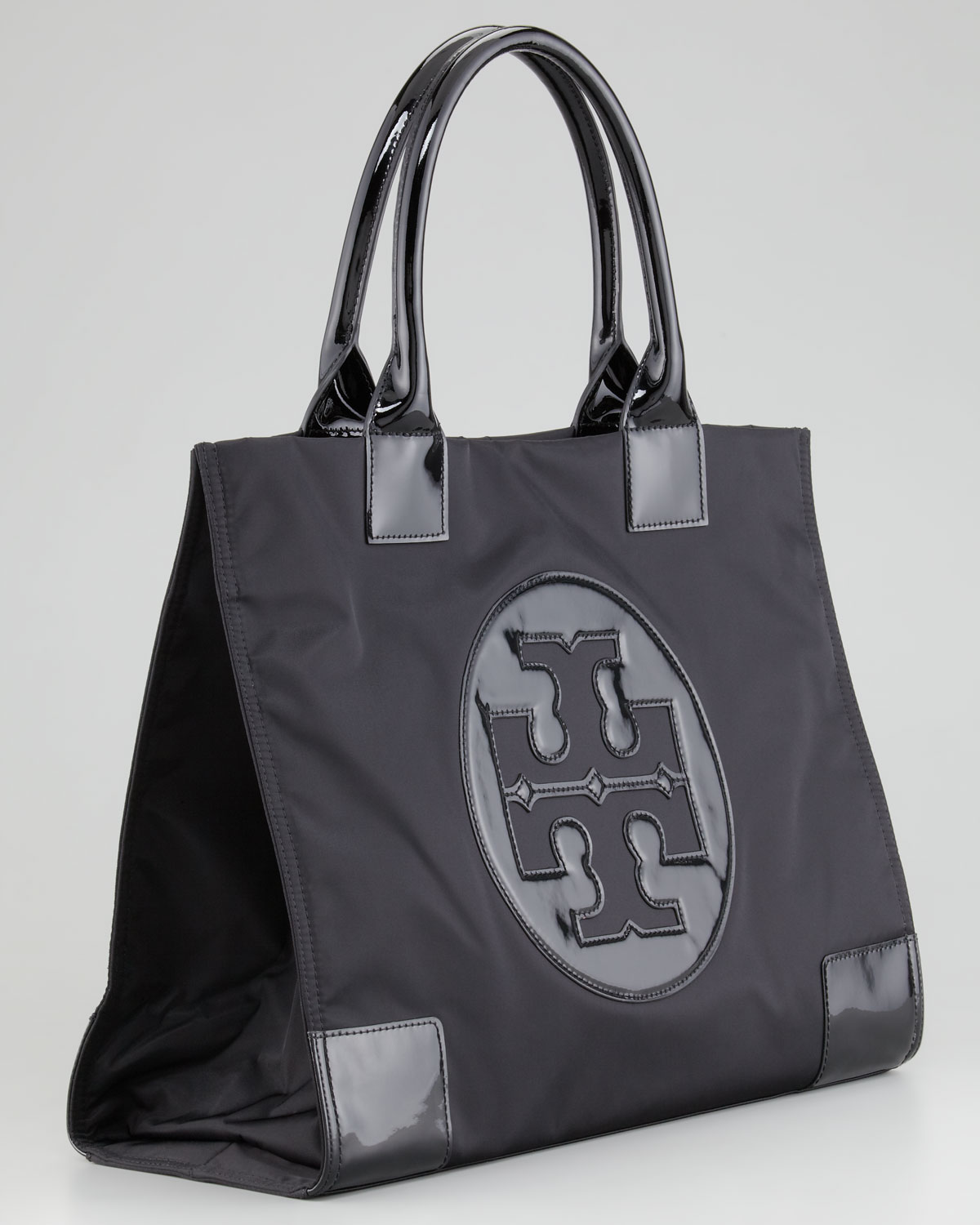
Once the marks are separated, the choice becomes a question of how visible you want the brand to be. The discreet option is a single cast or cut emblem; the pattern is the emphatic one. Observed on the brand’s US site in September 2026, the Miller sandal was listed at around $200, and the Fleming Crossbody about $470. Monogram small leather goods spanned from roughly $190 to about $310, with monogram ready-to-wear from around $395 to about $550. These are observed market prices and not an official price list; no fixed pricing is published by the brand, and figures move by season, market, material and channel. A tory burch sale changes which pieces are reachable and at what price, but it changes nothing about what either mark is. Read the product name before the photograph whenever you are assessing a listing.
The condensed version
The Double T is an emblem — two mirrored serif Ts in a circle, in use since 2004 and applied once per object. The T Monogram is a pattern: that emblem repeated across a surface, reported from Spring 2021 and sold as its own named line. Neither is more authentic than the other, and both run across bags, shoes and clothing. The confusion is a naming problem, and it resolves the moment you ask whether the mark appears once or many times. Capitalisation is a reliable tell in written sources as well. And when a source also tells you David Hicks was Moroccan, the thing you have learned concerns the source rather than the brand.