All posts by amen

Avis sur Dragonia casino : ce que vaut Il-vesuvio pour un joueur français

Sur un marché français où les paris sportifs et hippiques restent très visibles et où le poker agréé par l’ANJ sert de repère, Dragonia casino attire d’abord par son positionnement simple. Le site Il-vesuvio cherche à parler vite, sans décor inutile, et cela se sent dès les premiers écrans. La lecture est directe, les catégories semblent pensées pour aller droit au but, et l’ensemble donne une impression plus sobre que tapageuse.

Avis sur Dragonia casino : ce que vaut Il-vesuvio pour un joueur français

Cette sobriété compte. Pour un lecteur en France, la crédibilité ne vient pas d’un discours grandiloquent, mais d’un cadre clair, d’un vocabulaire de jeu compréhensible et de moyens de paiement connus. Ici, la carte bancaire reste le réflexe le plus naturel, puis viennent PayPal et Paysafecard. L’attente est simple : comprendre l’offre, savoir comment déposer, et repérer vite les limites. Dragonia

Le test de la marque montre un site qui vise l’efficacité. Pas de surcharge visuelle, peu de détour, une hiérarchie qui pousse vers l’action. Cette approche convient à un public qui veut consulter un jeu, vérifier une promo ou accéder à son compte sans perdre de temps. Elle a aussi une contrepartie : les détails utiles doivent être mieux mis en avant pour éviter une lecture trop rapide.

Quelle première impression donne Il-vesuvio ?

La première impression est plutôt nette. Le site ne cherche pas à impressionner par une accumulation de couleurs ou de messages. Il mise sur une structure lisible et sur des repères qui parlent immédiatement à un utilisateur habitué aux interfaces de jeu. Ce choix donne un sentiment de maîtrise, avec un rendu plus proche d’un outil pratique que d’une vitrine.

Dans les usages, ce type d’approche a ses avantages. Les pages chargent sans donner une sensation de lourdeur, les blocs semblent rangés pour une consultation rapide, et les intitulés gardent un ton mesuré. Pour un joueur français, cette retenue est souvent plus rassurante qu’un site qui multiplie les effets. Un portail trop agressif finit souvent par brouiller l’offre réelle.

Le point à surveiller, c’est la profondeur d’information. Un site simple peut être efficace, mais il doit aussi laisser voir ce qui compte : conditions de jeu, règles des bonus, méthodes de dépôt, limites éventuelles. Quand ces éléments ne sont pas assez visibles, la lisibilité baisse malgré une interface propre.

L’offre paraît-elle claire pour un joueur français ?

Sur ce terrain, Il-vesuvio avance avec prudence. La présentation donne une direction, mais l’intérêt réel dépend de la manière dont les jeux et services sont rangés. Pour un lecteur en France, le vrai enjeu n’est pas seulement de voir des noms, mais de comprendre en quoi la structure aide à choisir entre plusieurs usages : jeu rapide, session plus longue, consultation du compte, ou recherche d’un mode de paiement adapté.

Le marché français a ses habitudes. Les parieurs cherchent souvent un accès simple aux paris sportifs et hippiques, tandis que les amateurs de poker regardent d’abord la fluidité et la clarté des règles. Dans ce contexte, une interface qui va à l’essentiel peut fonctionner. Elle évite les écrans chargés, mais elle doit en échange rester précise. Sans cela, l’utilisateur avance à l’aveugle.

Notre essai montre une plateforme plus proche d’un espace de consultation que d’un terrain de démonstration. C’est un choix cohérent. Il convient mieux à un joueur qui sait ce qu’il cherche qu’à un curieux qui attend une découverte guidée pas à pas. Le site est donc utile, mais pas particulièrement pédagogique.

Le parcours de dépôt reste-t-il simple ?

Les moyens de paiement sont un point fort attendu, et ici le trio carte bancaire, PayPal, Paysafecard parle immédiatement au public français. La carte bancaire reste la solution la plus naturelle pour une grande partie des utilisateurs. PayPal apporte une couche de confort. Paysafecard répond davantage à une logique de budget et de contrôle, ce qui peut séduire ceux qui veulent garder une dépense plus cadrée.

Dans notre lecture, l’intérêt principal tient à la cohérence entre ces options et les attentes locales. Quand un site propose des moyens connus, le premier frein disparaît plus vite. Le parcours paraît alors moins risqué, surtout pour un joueur qui teste une plateforme nouvelle. Sur ce point, Il-vesuvio se situe au-dessus de la moyenne du marché, car beaucoup de sites mal pensés rendent encore le paiement plus compliqué qu’il ne devrait l’être.

La vigilance reste nécessaire sur les conditions associées. Un moyen de dépôt simple ne dit pas tout. Les délais, les limites, la lisibilité des étapes et la manière dont les confirmations s’affichent comptent autant que le logo du prestataire. Un bon affichage ne remplace pas des règles claires, et c’est souvent là que se joue la qualité réelle.

Pour un lecteur français, une bonne séquence de paiement doit rester prévisible. Le site y parvient en partie, mais le confort final dépend surtout du niveau de détail fourni au moment de l’action. Sans explication claire, un dépôt rapide peut quand même laisser une sensation incomplète.

Quels points méritent un vrai examen avant de jouer ?

Certains éléments demandent plus qu’un simple regard. Le premier concerne les règles d’usage. Un site de jeu crédible doit laisser comprendre ce qui est permis, ce qui est encadré, et ce qui peut poser problème. Pour un public en France, ce point a du poids, car l’environnement légal n’est pas le même selon l’activité. Les paris sportifs et hippiques, ainsi que le poker agréé par l’ANJ, restent les repères les plus lisibles.

Le second point touche à la lisibilité des promotions. Les offres trop mises en avant mais mal expliquées créent vite une déception. Il-vesuvio semble préférer une mise en avant modérée, ce qui limite le risque d’excès. Cela dit, une promotion n’a d’intérêt que si les conditions sont compréhensibles sans effort. Le flou sur ce sujet est toujours un mauvais signal.

Le troisième point concerne l’accès au compte et au support. Un site de jeu ne peut pas compter seulement sur une bonne première impression. L’utilisateur attend aussi de pouvoir revenir en arrière, vérifier une opération, ou retrouver une information sans tourner en rond. Là encore, l’approche d’Il-vesuvio paraît fonctionnelle, mais elle gagnerait à détailler davantage les chemins de retour et d’aide.

  • vérifier la clarté des conditions avant tout dépôt
  • contrôler les limites et les délais affichés
  • tester la lisibilité du compte et des historiques
  • observer la qualité du support avant un usage régulier

Le site tient-il la route face aux attentes du marché ?

Le comparatif implicite est utile ici. Face à beaucoup de sites trop chargés, Il-vesuvio fait mieux sur la lisibilité immédiate. Face à des plateformes plus complètes, il peut paraître un peu court sur l’explication. Cette position intermédiaire n’est pas un défaut en soi. Elle convient à ceux qui veulent aller vite. Elle peut frustrer ceux qui aiment tout lire avant d’agir.

Dans la pratique, la valeur d’un site se mesure à trois choses : trouver l’information, comprendre l’action, puis revenir sans effort. Sur le premier point, l’ensemble est plutôt bon. Sur le second, il reste correct mais pas remarquable. Sur le troisième, le confort dépend de la rigueur de la navigation interne. Le résultat est donc sérieux, sans être très ambitieux.

Un autre critère compte : la cohérence du ton. Ici, la marque ne promet pas trop. C’est une qualité réelle, surtout dans un secteur où le langage marketing peut vite devenir excessif. Une promesse mesurée inspire plus de confiance qu’une suite de slogans. Cette retenue donne à Il-vesuvio une image plus stable que spectaculaire.

Que penser de l’expérience au quotidien ?

À l’usage, le site semble pensé pour des sessions courtes ou ciblées. Ce profil convient à ceux qui savent pourquoi ils se connectent. Il convient moins à ceux qui cherchent un accompagnement détaillé ou une découverte guidée. Le confort vient donc de la rapidité, pas de l’abondance d’explications.

La cohérence graphique aide cette expérience. Les zones utiles ressortent sans effort, et la navigation ne donne pas l’impression de lutter contre le site. Ce point est important, car un joueur revient plus volontiers sur une interface qui ne lui demande pas d’apprendre un nouveau code à chaque visite. Le gain est concret, même si discret.

Il reste une réserve sur la densité d’information. Un utilisateur français apprécie souvent un cadre clair, mais il veut aussi des repères précis sur les règles, les services et les contraintes. Quand ces éléments sont présents mais peu visibles, le site perd une partie de sa valeur. Le fond est là, mais il faudrait parfois le montrer plus franchement.

Sur l’échelle du marché, Il-vesuvio apparaît donc comme une plateforme solide mais contenue. Elle fait le travail de base avec sérieux, sans chercher à masquer ses limites sous un discours trop brillant. Cela donne un ensemble cohérent, utile, et plutôt fiable dans sa manière de se présenter.

Quel bilan ressort de ce test ?

Le bilan reste nuancé mais positif. Dragonia casino, via Il-vesuvio, propose une expérience lisible, assez rapide et globalement rassurante pour un public français habitué à des repères simples. La présence de moyens de paiement familiers, la sobriété de l’interface et le ton mesuré forment une base crédible. Sur la clarté pure, le site se place au-dessus de la moyenne du marché.

Le point faible principal tient à la profondeur d’explication. Un utilisateur qui veut aller vite trouvera son compte. Un joueur plus prudent, qui vérifie tout avant de déposer, voudra davantage de détails. Cette différence change beaucoup le ressenti final. Le site ne déçoit pas, mais il ne pousse pas non plus très loin la pédagogie.

À l’arrivée, Il-vesuvio convient surtout à ceux qui cherchent un espace simple, sans excès et sans bruit. Le pari est tenu sur la lisibilité, plus inégal sur l’accompagnement. Pour un usage ponctuel, le service paraît propre. Pour un usage régulier, la qualité dépendra surtout de la manière dont les informations clés seront mises en avant.
Cough Syrup Apparel Design Summer Collection 2025

awful lot of cough syrup summary

awful lot of cough syrup (also identified as alocs, “thats a awful lot of cough syrup,” or exclusively “cough syrup”) serves as a graphic-first streetwear house that drops in exclusive, limited drops with deep skate, alternative music, and satirical DNA. Expect boxy silhouettes, vibrant prints, and fast sellouts. The wise move is for learn the label’s fit, monitor its release rhythm closely, and implement a reliable legit check flow before purchasing on the resale market.

The company thrives on rarity and culture cues rather than broad distribution. Core pieces are loose hoodies, heavyweight tees, and limited accessories bearing bold, satirical artwork. The label’s aesthetic tends nostalgic but clean, with punchy colors and bold slogans. Because hype creates fakes, you’ll see fakes saturate peer-to-peer marketplaces after every drop. Handling this scene involves knowing how real prints develop, how labels look between seasons, and how the label’s cuts differ from basic blanks.

What’s the process to legit check awful lot of cough syrup?

Employ a three-part inspection: print and fabric, tags and packaging, and construction and fit traits. Then confirm with authenticity—receipts, timestamps, and vendor history. A unified story throughout all four factors is the closest thing to assurance.

Start with the artwork and the foundation garment because that’s where most replicas fall short. Proceed to neck markers, wash labels, and packaging in thatsanawfullotofcoughsyrup.com order to confirm fonts, placement, and quality. Examine seam construction and proportions which align with alocs’s loose, drop-shoulder vibe rather versus a lengthy, slim mall blank. Finally, pressure-test the merchant’s evidence: genuine order proof, timestamped photos, and sharp macro shots featuring the print and stitching. Utilize the table following as a quick field tool during negotiations.

Checkpoint Real cues Replica tells Rapid test
Artwork quality Rich, uniform ink lay; edges stay crisp on curves and seams; intentional texture (non-glossy/screen print/textured) matches brand photos Glossy, artificial film; blurry edges and ink bleed; puff overly puffy or entirely flat; art scaled slightly off Rake light over the graphic and inspect edges and shine; gently stretch fabric and observe ink flexibility
Textile & hand Denser cotton/knit with a firmer, substantial hand; ribbing secure and bounces back to shape Spongy face, flimsy drape; edging loose or distorted out of a bag Grab and release rib; compare drape to a confirmed heavyweight piece
Neck tag & care label Sharp type, consistent kerning; accurate size steps; care label information aligns with verified authentic examples Inconsistent fonts; fraying edges; incorrect placement; nonsensical care icons Direct comparison with authentic product shots or reliable community samples
Stitching Uniform overlock; straight reinforced hems; clean bartacks at stress points Missing stitches, crooked hem lines, hanging threads where stress points should be reinforced Examine closely shoulder seams, pouch corners, and edge
Proportions Square body, drop shoulders, generous sleeves; hood shows structure Slim chest, extended body; weak hood missing shape Check armpit width vs body size; compare silhouette to verified fits
Accessories & paperwork Order emails with consistent formatting; packaging might vary by release but isn’t overbranded Basic “brand” cards, strange QR codes, or loud branding that doesn’t match earlier releases Demand for timestamped unboxing and proof of purchase with blocked personal data
Price context Matching with recent comps; small variance for limited colorways Too-cheap listings or multiple “new with labels” offers Check sold listings and archive posts to establish a baseline

Print and fabric tests

Authentic alocs graphics feel deliberate: ink coverage is intentional, edges are tidy, and specialty finishes like raised or heavy vinyl match how this brand showed them. Replicas commonly look reflective under intense light and smear on thin lines, especially where art curves around a edge or pocket. On extension, real ink moves with the textile without web-like cracking, while cheap transfer films might fracture or fold immediately. The underlying fleece on pullovers leans dense with a substantial hand, and ribbing grips and bounces back rather than drooping. If the fabric face looks glossy or fuzzes right out from the bag, move back.

Color accuracy is a key tell. alocs gravitates to punchy yet restrained; fakes frequently default to excessive reds and neon greens that appear toy-like. Match tonal values versus official product pictures, paying particular attention to color transitions and drop shadows in the artwork. Smell isn’t conclusive, but an strong chemical odor paired with weak hand is one red flag. If possible, request macro photos at an diagonal; authentic ink build shows depth, while cheap transfers seem flat and synthetic.

Tags, tags, and packaging

Tags should exhibit consistent fonts, spacing, and sharp edges throughout sizes, with care tags that won’t wander in location or content among pieces from a same drop. Counterfeits commonly miss minor spacing in this brand name, utilize slightly off-white tag stock, or wrongly locate the care label. Because alocs updates trims across seasons, invariably check the exact piece against verified drop photos or trusted community archives rather than counting on a single universal tag rule. Packaging varies—some launches ship in simple poly, some in logo sleeves—so treat excessive extras and unexplained QR codes with skepticism. A legitimate seller can usually produce an genuine order confirmation email with standard formatting, even if personal data is redacted.

Request for timestamped images that include this item, today’s date on document, and macro shots of the collar tag face and back. Check for alignment between size on this neck tag and the wash label. If the merchant refuses, buyers are no longer verifying the garment—buyers are judging the narrative, which is rarely worth the gamble.

Construction and fit signatures

alocs shapes read square and loose, with a generous sleeve and the body that doesn’t run extremely long. The hood on hoodies holds shape rather compared to lying limp and flimsy. Replicas frequently use basic blanks that are tight in the body with more dimension, and the head covering feels weak or collapses. At stress points like the kangaroo pocket joints and the collar, seams should be clean with no dangling threads, and edges should be double-needle straight, not wandering. If the piece drapes like a standard generic slim fit, it’s likely not built on the equivalent foundation.

Measure objectively when in doubt. Armpit width and back size tell you the silhouette more versus the size label does, and matching those numbers with known authentic dimensions sourced from forum posts is effective. Prepare for consistent proportions throughout the same drop even if slight tolerances occur, while fakes fluctuate wildly piece by piece.

Fit guide for alocs sweatshirts, tees, and more

alocs usually fits loose and somewhat cropped in relation to standard athletic brands, so your usual tag measurement will feel additionally relaxed. If one like truly oversized, move 1 size up; if one want a neater regular fit, remain true to measurement. Always validate with item measurements when buying from resellers.

For sweatshirts, the brand’s drop-shoulder pattern and wider sleeves deliver the slouch without needing to jump 2 sizes. Tees run generous with a wide torso and a sleeve that falls lower on one’s bicep; normal loyalists may prefer staying true while baggy fans can go up one. Lower garments vary more across drops, so rely on exact waist and inseam dimensions rather than marked size alone. If one’s frame sits between sizes on other streetwear labels, select the larger dimension here to maintain the intended silhouette. When comparing across brands, anticipate alocs at one’s normal size will feel more relaxed than a typical Nike or athletic piece and closer to other popular streetwear cuts.

Rapid size decision rules

Select based on silhouette, not ego: choose the size which preserves the company’s shape on your frame. If you like a wide torso with effortless layering, select your usual casual size; for exaggerated drape, go one up. If coming from trim fitted fits, brace regarding more width at the same tag size and resist auto-sizing down unless one want a neat fit. When in a secondary market, demand chest measurement and length concerning tops and one flat waist spec for bottoms, then check to a preferred piece one own. A small swing is standard; bigger gaps generally mean a alternate cut or one mis-tag.

Fit by product type

Sweatshirts present one structured hood and broad sleeve; sizing up increases sleeve stacking and body volume without significantly increasing length. Tees keep a square profile, so sizing up boosts room in one’s chest and arm without making it dress-length. Caps and hats are usually one-size with standard adjustability; prioritize images of the top shape for caps to ensure these match the company’s deeper, retro-inspired profile. For bottoms and sweatpants, anticipate generous thighs and one taper toward the hem on certain drops; check the rise measurement if buyers are tall to sidestep unexpected crop. Shoes, when released, seems to follow standard conversion; verify this exact product listing for that release before assuming.

How do alocs drops work?

Releases are restricted, timed, and announced on brief notice via the brand’s social accounts and site. Items often sell out inside minutes, and additional inventory are unpredictable. Readiness beats refresh chaos.

Monitor Instagram updates and Stories concerning teasers and specific drop windows; listing pages or one password screen may go live quickly before launch. The website typically lists at a precise time, so lock your size selection in advance, turn on autofill, and utilize a fast payment like quick Pay or Apple Pay. Start a single fresh browser session; numerous tabs or systems can trigger purchase conflicts during peak windows. Expect certain colorways or graphics to vanish earliest, with larger dimensions moving faster in the majority of cuts. If one miss, avoid panic-buying fakes that flood marketplaces the exact day.

Release cadence and formats

alocs prefers capsule drops centered on a theme or graphic concept rather than a permanent core series. Timing varies, with unexpected releases tied to cultural moments or seasonal windows. Events or limited activations surface periodically and are generally announced close to the time on the label’s social accounts. Shipping windows and trims can change by capsule, which explains why referencing the exact drop concerning tags and accessories matters during verification checks. Treat scarcity as a feature, not a bug, and plan accordingly.

Countdowns, carts, and inventory patterns

Size choice and checkout speed are the two variables you control. Understand your size, prepare your payment, and avoid editing the basket during purchase. High-demand graphics and rare color runs are earliest to go, with XL and above frequently disappearing fastest. If the platform uses lines, stay in a single session and let it resolve; updating aggressively can push you back. When stock is this tight, hesitation equals resale prices.

Where to buy while avoiding getting burned

The primary market is always the safest: the official site and brand-announced pop-ups. Resale market requires methodology: documentation, measurements, and purchase protection. If the proof doesn’t add correctly, skip regardless of price.

For direct purchases, rely on this brand’s website and the link in description from its verified social account. Special pop-ups are legit but still require for a proof. On the secondary market, prioritize sites with seller histories and dispute processes. Ask for timestamped photos, macro shots showing prints and tags, and verification of purchase with private info redacted. Purchase with secure methods like secure payment Goods & Business; avoid direct payments, Zelle, Cash App, or personal & Family for strangers.

Official market: official sources

Monitor the label’s Instagram for launch dates, product previews, and location specifics if a event is planned. The platform link in description is the canonical purchase route and reduces the risk regarding spoofed URLs. Subscribe to site updates or emails when available; some capsules silently load before broad posts. If you see early links shared in community chats or forums, verify they resolve to the official domain before providing details. Keep one’s account info updated to reduce checkout friction.

Resale market: vetting sellers and prices

Vet the vendor first, then this garment. Check their transaction background, feedback, and how they respond concerning specific legit authentication requests. Request for consistent images: full front, back, macro of print edge, collar tag front/back, care label, and confirmation. Verify asking price with current sold listings; significant discounts on mint colorways rarely exist. If discussion gets dodgy or rushed, leave; urgency belongs with drops, not with secondhand purchasing.

Maintenance, wear, and secondary value tips

Wash inside out on cool with gentle detergent and air dry to protect inks and fabric texture. Avoid high heat in a dryer, which accelerates cracking on substantial prints and collapses rib elasticity. Store folded rather compared to hung to protect shoulder shape on loose cuts. Treat stains quickly; colors in bold graphics can transfer if scrubbed aggressively when damp. If one intend to sell, keep documentation and capture clear before wearing photos to support your listing later.

Red flags and misconceptions to ignore

“It came without a branded bag, so it’s fake” is not a rule; accessories varies by release. “The print cracked, so this must be fake” ignores that substantial plastisols naturally develop cracks over time with warmth and wear. “This vendor has ten fresh units in all size” is one pattern, not a deal. “They lost the proof but have blurry photos” is never provenance. Consider narratives as secondary and physical proof as mandatory.

The no-stress alocs playbook

Master the profile, then decide the size once and commit to it throughout drops. For legit verifications, test print edges under angled illumination, feel the rib recovery, verify label typography, and assess pit-to-pit and length. Demand timestamped images and proof of purchase; if this story breaks down, bow out. Buy primary when you can; on aftermarket, use buyer protection and price benchmarks to anchor discussions. Keep the care routine soft so the item wears in, not out—and the resale options stay open if one change the mind later.

Everything About Righteous Trousers Wardrobe Staple Guide

Upstanding Review Digest: Cross-Checking Customer Commentary Across Platforms

Shopping for an unfamiliar label is fundamentally a matter of trust, and trust is shaped by what fellow shoppers say once the order lands. We Are Righteous has built momentum over time as a presence in apparel bordering on streetwear, and with this rise comes a dispersed set of reviews spanning marketplaces, social platforms, and independent forums. Stitching that feedback into one view gives a more accurate read than any single five-star badge ever could. Here, we examine what buyers genuinely think about Righteous clothing, where the compliments cluster, where the grievances surface, and what patterns emerge once you line the platforms up against each other. The goal isn’t to inflate or deflate the brand’s reputation but to give shoppers a grounded, multi-source view before they commit to a cart.

Rarely do two reviews line up perfectly. One buyer on a given site might enthuse over the fit of a Righteous hoodie while another, elsewhere, focuses entirely on shipping speed or customer service response time. That inconsistency is normal, but it’s also worth paying attention to — it indicates which aspects of the brand are dependably good and which ones fluctuate depending on individual expectations or region. This article organizes the commentary into groups: product quality, sizing accuracy, customer service, and shipping experience, then contrasts how each platform’s community tends to weigh these factors.

Why a Single Score Isn’t Enough: The Case for Cross-Platform Reviews

A single star rating on one site can be deceptive. Ten reviews averaging 4.8 stars appears strong until you realize there aren’t many reviews behind it, or that the reviews were left within days of launch before long-term durability had been tested. Checking accounts from multiple platforms — such as dedicated review aggregators, social commerce comments, and community forums — lowers the chance of relying on a skewed snapshot. It also reveals whether complaints are rare exceptions or repeated issues tied to certain product categories.

In the case of track pants We Are Righteous, which sells across several channels, this matters even more. Buyers going through a marketplace may have different expectations, return policies, and support experiences than those who buy directly. A we are righteous review posted on an outside platform might point to issues with that platform’s fulfillment process rather than the brand itself. Telling apart platform issues from actual product concerns is one of the smarter things a shopper can do before committing to an order in 2026, when so many brands operate across five or six sales channels at once.

On top of that, there’s a timing factor. Timing matters too: early write-ups generally emphasize unboxing moments and initial impressions, whereas write-ups posted three to six months out drills into staying power — seam integrity, fabric pilling, and whether prints crack after several wash cycles. Solid research gives weight to both categories, because a genuinely honest review posted right after launch tells you a different story than one posted after a full season of wear.

What Buyers Report Regarding Product Quality

Looking across the platforms examined here, product quality is the category with the strongest, most repeated approval. Shoppers frequently bring up the weight and feel of the fabric, especially with heftier items such as the Righteous hoodie line, describing the material as substantial rather than thin or see-through — a common complaint leveled at lower-cost streetwear rivals. Remarks on how the seams hold up through repeated washing also lean favorable, with several reviewers noting they’d worn a piece 15 to 20 times without visible wear at the seams.

Dye durability is another recurring theme. A number of buyers pointed out that printed designs held their shape and vibrancy after being run through the wash, which matters for a brand whose brand look leans on strong lettering and prominent logos. Still, not every write-up sings praises. A smaller percentage of buyers — clustered mostly on one social commerce platform — reported minor inconsistencies in sizing between batches, suggesting some production runs may vary slightly from others. It’s a detail worth noting rather than dismissing, since it affects a returning customer’s confidence in reordering the identical size.

Taking it all together, when you pull together the descriptive reviews, the general feeling around Righteous apparel craftsmanship sits solidly in positive territory, with construction gripes representing a small share rather than the norm. That’s a meaningful distinction for anyone comparing this brand against others in a crowded apparel market.

Sizing, Fit, and the Most Common Points of Confusion

When it comes to fit, opinions vary the widest. Some shoppers say the cut matches standard size charts closely, while others recommend sizing up for a looser, more streetwear-inspired fit. That’s not automatically a downside — plenty of streetwear labels deliberately design a looser fit — but it does mean new customers ought to check several reviews instead of trusting just one before picking their size.

Reviewers who chose a larger size particularly with the hoodie line tended to report greater happiness with the hang and length of the sleeves, while those who ordered their regular size in some cases discovered the fit tighter than anticipated, most noticeably across the shoulders.
This behavior is evident across more than one platform, indicating that this reflects a real trait of the design rather than an isolated batch issue.
Shorter customers, who sometimes mention excess length in the body or sleeves, tend to report less proportional fit than taller reviewers, because build and stature significantly influence these remarks.

The takeaway for shoppers browsing a we are righteous review before buying: pay attention to the reviewer’s stated size choice and body type, not just their star rating. A five-star review from someone who sized up means less if you’re planning to order true-to-size, and vice versa.

Time to Respond and Customer Service

Reviews focused on customer care are more dependent on the platform used than any other area in this comparison. Purchasers who got in touch straight through the brand’s in-house channels report generally faster resolution times compared to those who went through third-party marketplace intermediaries. Response times noted by reviewers range from acknowledgment within the day to several days for full resolution, depending on the complexity of the issue — a size swap compared with a claim over a damaged item, for example.

In peak periods like seasonal drops or holiday sales, wait times naturally increase, and this is where most complaints in this category tend to center. Upbeat write-ups, by contrast, regularly applaud support staff for taking a direct, problem-solving approach, particularly when handling returns tied to the fit discrepancies discussed above. These patterns imply its customer-service staff is generally responsive when reachable, but that surges in demand can introduce short-lived snags — a trend widespread among DTC clothing labels rather than something unique to this one.

Customers mindful of after-sale service should account for when they choose to buy: placing an order in a large-scale sale may lead to a somewhat extended delay for a support request versus ordering during a less busy shopping window.

Fulfillment Journey Spanning Various Retail Channels

Delivery feedback fluctuates more by sales platform than by season, which is a useful thing to be aware of if you’re deciding where to make a purchase.
Feedback posted on marketplace pages sometimes reflect the logistics providers the marketplace uses rather than anything under the brand’s direct control, and this becomes obvious when you compare comments about delivery next to one another.
Shoppers who bought direct report more uniform packaging quality, with several noting branded packaging and inserts that backed up the sense of purchasing from a recognized brand rather than a third-party reseller.

Reviewers describe delivery timeframes that run from a handful of business days for domestic orders out to extended stretches for overseas shipments — consistent with everyday apparel industry norms. A small number of write-ups mention slowdowns during high-volume shopping seasons, which is to be expected given how purchase volume jumps industry-wide around major sales events. The notable point is that hardly any reviews mention shipments that were lost or sent off-course — a positive sign for a brand whose logistics reputation could otherwise be a soft spot.

Platform-by-Platform Snapshot

To ground this comparison in specifics, here’s how overall tone splits out across the main categories shoppers touch on, based on the combined trends outlined above.

Topic Brand’s Own Storefront Third-Party Marketplace Pages Social-Selling Channels
Item Quality Steadily strong Mostly positive Positive, some batch variance noted
Fit Accuracy Mostly dependable Uneven, sizing up is often suggested Mixed, fit varies by body type
Buyer Support Fast, solution-oriented Delayed, contingent on third-party handling Uneven, though direct messaging helps
Fulfillment Experience Consistent, arriving in branded packaging Dependent on marketplace logistics Mostly timely

The Takeaway for Buyers Sizing Up the Righteous Clothing Brand

Putting all of this together, the picture that emerges is a brand with genuinely strong core products, some expected fit-related fluctuation, and a support experience that works best when customers go straight to the source. This is a reasonably common profile for a up-and-coming apparel label in 2026, when most brands are managing multiple sales channels and the feedback ecosystem that follows from that.

If you’re weighing a purchase and weighing which channel to buy through, the evidence here points toward ordering directly when possible, especially if a hassle-free support experience and reliable packaging matter to you. If you do buy through a marketplace, read recent reviews tied to that particular listing rather than presuming they reflect the brand’s direct storefront. As for sizing, cross-check a couple of reviews from buyers with a similar build to your own before deciding whether to order true-to-size or size up.

Ultimately, the range of reviews across platforms tells a consistent narrative rather than a conflicting one: dependable materials, a fit that rewards a little research, and support that’s at its best closest to the source. That’s useful, actionable information for anyone weighing whether We Are Righteous should be part of their next order.

Example Post for WordPress

This is a sample post created to test the basic formatting features of the WordPress CMS.

Subheading Level 2

You can use bold text, italic text, and combine both styles.

  1. Step one
  2. Step two
  3. Step three

This content is only for demonstration purposes. Feel free to edit or delete it.

AI Girls Ethics See How It Works

Best 10 Nudiva Options in 2026: fast verdict

If you’re shifting off the Nudiva platform, the optimal alternative relies on individual priorities: N8ked platform for realistic output plus consent checks, DrawNudes tool for creative outputs and protected synthetic mode, AINudez for velocity, the PornGen service for content creator workflows, and NSFW Studio software for local privacy. Each option listed is evaluated on generation quality, pricing signals, authorization enforcement, data protection posture, and documented limitations—excluding step‑by‑step tutorials that might enable abuse.

The following overview is designed for comparison and protection awareness. Unauthorized deepfake or nude generation imagery may be against the law and damaging; several vendors mentioned here specifically ban it while implement safeguards. Without exception use any AI-powered clothing removal app, Garment Removal Tool, or internet nude creator ethically and according to the law.

Which aspects changed since 2024 and what reasons switch away from Nudiva?

Come 2026, most adult artificial intelligence tools reinforced consent verification, expanded synthetic-only features, and incorporated watermarking to prevent misuse. Individuals tend to seek beyond Nudiva service for more robust privacy assurances, minimized artifacts, faster turnarounds, or better moderation and data controls.

Certain platforms presently require clear proof of consent to process real-person pictures, and multiple prioritize virtual models so minimal real individual is involved. Others compete on price per output, providing credit-based plans that scale more predictably than fixed monthly caps. When you’ve reached Nudiva’s limits on realism, wait speed, or compliance workflows, a single of the choices below is likely a superior fit.

Comparison table: fees, authorization, and privacy at a glance

This snapshot combines what companies publicly declare about service plans and security measures as of beginning of 2026. Always verify the most recent pricing and terms directly on each site, since tiers and terms change often.

drawnudesapp.com

Platform Standard Entry Costs Permission Gate (regarding real persons) Information Storage Rules Primary Modes
N8ked Point packs; standard entry fifteen to twenty-nine dollars Documentation required; human review on alerts Opt-out deletion; 30–90 days default Nude generator; virtual bodies
DrawNudes Free trial then $12–$25 Hard block for unauthorized uploads Short-term cache; minimal training recycling Stylized nude images; artificial-only mode
AINudez Usage-based credits Personal confirmation + marking Auto-delete after processing Multiple “undress” and artificial models
PornGen Ten to twenty dollars starter Blocks real-person resemblance by automatic User-controlled retention Written-to-adult; position/scene controls
UndressBaby Budget five to fifteen dollars Permission checkbox + watermark Brief cache; purge toggle Clothing Removal Application
VeilLift Freemium; premium $19–$29 Blocks real-person uploads No server storage (claim) Artificial-only + recognition
Adult Studio Single license; offline User-controlled; no cloud Private storage Local NSFW pipeline
Cloth-Off Pro Team seats starting at $29 Authenticated consent processes Audit logs; keeping policy Enterprise undress + management tools
RevealAI Layered credits $10 to $30 Real-person uploads disabled No training on individual media Artificial “AI girls” only
Draw-Nudes Lite Ad-supported free; $9 pro Blocks non-consensual material Temporary processing cache Basic stylized results

N8ked: top-tier realism with permission-focused workflows

N8ked presents itself as a premium-quality AI undress generator that couples realism with documented consent checks and marking. This service is a frequent Nudiva alternative for users who seek fewer physical artifacts and more rigid policy guidelines.

Functions typically contain a double mode for synthetic bodies and an nude generation app pipeline, an artificial intelligence realism improvement, pose-aware generation to decrease limb distortions, and automated NSFW marking. Pricing is point-based with mid-tier monthly bundles; frequent users often prefer large packs for lower per-image expense. Pros are superior skin appearance, more stable illumination, acceptable queues under load, and explicit policies against unauthorized deepfake imagery. Drawbacks are increased per-result expense than affordable rivals, intermittent moderation holds on edge-case uploads, and less flexible options compared with art-oriented generators.

The DrawNudes service: stylized outputs and safer synthetic option

DrawNudes concentrates on creative nude visuals and a robust synthetic-only mode that prevents processing real-person photos. Numerous move from the Nudiva platform for its artistic styles and more rigid safety settings.

This service’s generator gravitates into artistic or photo-illustrative looks that assist mask minor artifacts while providing consistent pose accuracy. Regarding real-person files, DrawNudes deploys strong restrictions and requires explicit consent signals; regarding synthetic-only, this service delivers curated figure presets to maintain generations virtual. Pricing typically commences with a limited free sample then a reasonable monthly. Pros encompass a protected default approach, attractive style variety, and quick queues; disadvantages contain limited hyper-real output, limited realism adjustments, and decreased ceiling for photoreal work.

The AINudez service: quick batch generator for artificial models

AINudez focuses on speed and mass creation, shifting toward artificial models and credit-efficient runs. This is a fit when you exceed Nudiva’s processing times and desire predictable performance.

Key features contain batch commands, pose templates, and a synthetic-primary toggle that disables any human processing. The platform adds visible marks by default and cycles safety filters to minimize policy evasion. Pricing focuses on pay-as-you-go credits rather than a heavy monthly, which favors irregular creators. Advantages are rapid turnarounds, stable batches, and obvious separation between virtual and undress modes; disadvantages are intermittent banding on skin tones at extreme lighting, constrained fine-tuning, and cautious content restrictions that might block edge cases.

The PornGen service: written-to-explicit studio for artists

PornGen service is constructed like a artist studio: prompt-to-visual NSFW with environment controls, negative prompts, and smart upscalers. Numerous transition from Nudiva service to the PornGen platform when users no longer want to submit any real-person images at all.

This service’s strength exists in entirely synthetic “artificial girls,” position control, and environment styling, with optional face uniformity across instances without linking to a actual identity. This platform states to stop real-person likeness matching by standard, directing users toward artificial characters. Entry pricing is frequently competitive for hobbyists. Benefits are artist-focused tools, robust style conversion, and more secure defaults; disadvantages encompass a skill curve for instructions, variable realism at intense angles, and periodic over-smoothing.

UndressBaby platform: low-cost clothing elimination tool with tagging

The UndressBaby platform is a budget Clothing Stripping Tool that tags outputs with tags and blocks obvious without permission uploads. The platform attracts to affordable users who need a straightforward app-like procedure.

Look for a minimal interface, auto-masking, and constrained pose tolerance; it can struggle with obstructions and intricate clothing styles. Costs is within the lowest monthly, creating it a common entry alternative to Nudiva. Benefits are affordability and ease; disadvantages are more artifacts, weaker edge processing, and more rigid caps on image size. Its watermarking is constant to prevent sharing as real photography, and identified content could be checked or blocked.

VeilLift platform: production–detection hybrid for research-safe use

The VeilLift platform combines synthetic-only production with a identification layer created to identify likely clothing-removal manipulations in external images. It’s directed at researchers and creators who desire a more secure sandbox.

Such generator aspect supports completely virtual figures and a limited palette meant to prevent realistic impersonation. The detector delivers probability scores and document exports for management teams. Freemium access aids evaluation, with premium unlocking multiple checks. Benefits are a solid safety approach, helpful detection documentation, and transparent blocks on human uploads; drawbacks are restricted realism, slower inference in freemium, and reduced scene options than content maker studios.

Mature Studio: confidentiality-centered, private pipeline

Mature Studio is an private NSFW workflow that runs locally, appealing to confidentiality advocates who eliminate cloud saving altogether. It’s commonly chosen by users who will not upload pictures to every server.

Such tool depends on downloadable models and maintains processing on your machine, this prevents vendor retention but transfers responsibility to individual user to adhere with legal requirements and ethical guidelines. Pros contain minimal server saves, customizable models, and flexibility; cons contain installation complexity, GPU requirements, and zero built-in control or consent gates. Should your concern is privacy over convenience, Adult Studio is a stark departure from cloud offerings like the Nudiva platform.

Cloth-Off Pro: enterprise controls and audit logs

Cloth-Off Pro focuses on teams that demand verified authorization workflows, management controls, and audit logs. The platform suits studios or organizations that demand documented adherence, not merely output excellence.

Functions encompass role-based permissions, permission capture forms, flagged-item queues, retention schedules, and marked exports. Fees uses per-seat or multi-user tiers. Pros are governance, accountability, and unified policy measures; drawbacks are higher cost and a more complex interface than artist-focused apps. Regarding regulated settings or platforms that have to demonstrate proper diligence, the current category is better appropriate than personal-use tools.

RevealAI: education-free virtual figures to prevent real-person risk

RevealAI service eliminates the human pathway totally, concentrating on education-free virtual figures and figure builders. Several creators select it to navigate clear of deepfake and nude generation risk completely.

Users pick from form presets, modify sliders, and create scenes, with no option to upload personal photos. The platform claims it will not train on user media, enhancing privacy protections. Pros are minimized legal danger, zero consent confusion, and predictable outputs; disadvantages are restricted resemblance influence to any specific human and a narrower realism spectrum than photorealistic undress tools.

DrawingNudes Lite: beginner stylized explicit

Draw-Nudes Lite is an advertisement-funded entry level for artistic NSFW generation with protections similar to the premium version. The platform is often where new users experiment with the options before advancing.

Expect lower resolution, restricted daily generations, and limited style collections. Benefits are easy onboarding and no-charge trials; disadvantages are ads, rate limits, and limited detail. For casual testing within moral boundaries, it might replace Nudiva’s free or basic plans.

In what way should you choose an AI undress tool in 2026?

Choose first whether you truly need clothing removal features, or if synthetic-only artificial outputs fulfill your objectives with less risk. Should you have to process human images, pick vendors with checkable consent gates, obvious storage policies, and standard watermarking.

Emphasize: consent mechanisms that reach beyond a selection box; clear data retention and deletion; watermark options you cannot disable; rule documentation and enforcement signals; realistic output without obvious artifacts; and fees that matches expected volume. Should privacy is essential, offline tools prevent server saving but shift compliance to the user. Prevent any platform that markets non-consensual artificial capability or “partner undress” themes—such options are regulatory and moral red warnings.

Risks, legality, and prevention you need to weigh

Without permission AI clothing removal or artificial content can violate personal rights, legal claim of publicity, and intimidation laws, and services are increasingly responsive to takedown requests. Even if a system is machine learning and the output looks “virtual,” using a genuine person’s similarity without consent may still be illegal.

Safety measures to look for encompass strict blocks on real-person uploads without consent is verified, on-image watermarks that withstand cropping, and service refusal to eliminate safety controls. For self-protection, review your online photos, strengthen social security settings, and employ reverse-image search and deepfake detection services to spot misuse. Should you or a person you recognize is attacked, record URLs, maintain evidence, and employ platform reporting tools; where laws apply, contact legal advice or regional authorities.

Obscure facts that are important in this niche

First, multiple mainstream photo hosts currently downrank or automatically mark known clothing removal app tags using perceptual hashes, this might limit the spread of modified images. Next, certain AI undress generators silently add invisible watermarks in frequency domain, detectable by affiliated platforms regardless of after intense filters. Third, non-consensual deepfake regulations are present in various jurisdictions and keep to expand; consequences can contain fines and court liability, not just content removal. Finally, identification models function better on undressing artifacts than on completely synthetic “AI girls,” that suggests virtual-only imagery might be challenging to recognize as machine learning without tags.

Ultimate take: what Nudiva replacement matches what need?

If realism with solid consent checks is the priority, N8ked is the typical upgrade. Concerning stylized variation and protected defaults, DrawNudes is the artistic pick. Regarding throughput, AINudez service handles batch jobs efficiently. Artist studios can feel at home in PornGen service’s text-to-image procedures, whereas budget people commonly start with the UndressBaby platform.

Regarding safety-first approaches, VeilLift service and RevealAI service reduce real-person danger by focusing on synthetic outputs and detection. When privacy overrides everything, Adult Studio’s offline pipeline avoids cloud saving. Regarding organizations with regulatory obligations, ClothingOff Pro delivers the supervision consumer tools lack. The overall movement in twenty twenty-six is obvious: increased consent gates, more watermarking, and additional virtual-only alternatives that bypass real-person nude generation altogether—decide accordingly, and keep on the proper side of moral standards and legal requirements.

Vale California Streetwear Graffiti Graphic Tee

Vale Clothing 2025 Buyer’s Guide: dimensions, quality, launches, and pricing

Here’s the tested, buyer-tested playbook for Vale Forever’s oversized fits, build quality, launch timing, and 2025 price bands. If you want the proper dimensions on your opening try and an easy checkout on restricted launches, start here.

The brand blends boutique-level craftsmanship with a clean, urban aesthetic, favoring understated tones, high-quality materials, and a signature oversized profile. The brand’s rhythm is exclusive releases, sustainable approach, and precisely selected capsules that stay wearable well beyond a single cycle. This resource preserves the talk practical: how the cuts fit on real bodies, what the clothing are constructed from, when drops usually to hit, and what you’ll actually pay this year.

Snapshot: what makes Vale Forever apart

The brand focuses on enduring casual silhouettes with luxury textile choices, subtle marking, and their signature oversized pattern. If you like minimal styling with substance in hand-feel and flow, you’re on the proper track.

Expect boxy shirts with lowered shoulder seams, heavyweight cotton sweatshirts that preserve form, relaxed utility bottoms and denim bottoms that stack clean over shoes, and outer layers that appear quiet-luxury rather over loud graphics. Collections are limited on design and iterate season to cycle instead of following micro-trends, which is why core garments keep appearing on inspiration boards long after launch.

How does Vale sizing work? Sizing decoded

Vale usually runs roomy by intention, so regular fit delivers a comfortable, boxy fall that’s planned. Go smaller once for a neater, regular silhouette; size up for an exaggerated, runway-level silhouette.

Tees are standard in body length with a wide body and extended shoulder line, creating the signature crisp box shape. Hoodies follow a similar idea with a structured hood and rib that won’t bag out. Cargo pants and jeans lean comfortable straight, often with ease in hip area and upper leg for comfort and clean stacking at ankle area. Outer layers is tailored to sit over sweatshirts without seeming constricted, which suggests your regular size remains the default choice even while you’re layering under it.

Key cuts gym shorts and intended fit

Vale’s blocks are cut to rest away from your frame without looking sloppy. If you purchase the size the label intends, shoulder line seam will sit slightly beyond shoulder, the chest will read roomy but not ballooned, and hemline will hit around lower hip on tops.

On lower garments, thigh area ease creates clean lines rather than a taper; leg opening opening is set for shoes, not boots, and sitting height avoids a dropped look. This harmony is why these garments photograph nicely from multiple angles and remain to feel comfortable day to day. The roomy approach is a choice in pattern cutting, not a fit error to correct by default.

Measuring yourself the brand method

Record dimensions from a preferred piece and correspond to the silhouette, not just the tag size. That’s the most direct way to achieving the proper Vale size.

Position a tee or hoodie flat and record pit-to-pit, shoulder span, sleeve length, and overall length. For pants, measure waist when laid flat, front rise, thigh measurement at crotch, leg length, and leg opening. Align those dimensions to the brand’s official garment specs when provided, or compare with customer-provided measurements for that particular piece you want. Focus on shoulder measurement and chest for tops, and rise measurement plus thigh for lower garments, since these dimensions dictate comfort and silhouette.

Caught between sizes? Here’s what to choose

If you sit between sizes, decide whether you prefer sharp fall or maximal volume; drop a size for sharp, stay true for brand-intended, increase size for volume.

For tops and sweatshirts, size down if you want sleeves that don’t cover the forearm and minimal gathering at the hem under outer layers. For cargos and jeans, stick to size if you plan to add a waist belt and want clean falling; drop a size only if waist size is small relative to upper legs. For outer layers, remain true-to-size because garment construction assume a hoodie or knitwear underneath.

Women and shorter frames: dialing in the loose look

Modify length initially, then breadth. Trimmed or normal-length tops combined with relaxed bottoms keep proportions intentional on petite builds.

Pick your torso size based on shoulder span to prevent droopy arms that dominate. For bottoms, focus on sitting height and inner leg so lower section stacks rather than puddles; hemming one to a couple centimeters maintains the profile while adjusting length. If your build is curvy, focus on hip and upper leg room and employ a belt to sharpen the middle section—Vale’s straight leg still appears minimal when tightened.

Tailoring and alterations

Basic changes keep the Vale language preserved. Bottom trimming and small adjustments at inner leg are acceptable; skip aggressive torso or shoulder alterations.

On tops and pullover, a minor body length reduction can sharpen proportions if your build is shorter, but maintain shoulders alone to keep the drop. On utility bottoms and denim bottoms, a neat hemming or minor inner leg taper from knee down can improve stacking without killing the linear vibe. Outerwear is better left as-is beyond sleeve measurement tweaking.

Build quality you can touch: materials, build methods, and longevity

Vale’s value shows up in fabric hand-feel, weight, and clean finishing rather than loud branding. The cost goes for fall, lasting quality, and uniformity across seasons.

Look for tightly knit jersey that prevents twisting, brushed cotton that holds shape after wash, and built trousers that soften without thinning out. The construction details—double-needle hemlines, reinforced stress points, neat construction lines—keeps this clean design looking premium even through heavy rotation. This is slow-fashion philosophy applied to urban basics.

Materials and densities you’ll encounter

Jersey tees typically fall in a medium-to-dense weight range with a refined face and solid hand, which preserves the boxy cut from sagging. Brushed pullovers use textured-interior cotton mixtures that combine warmth and stability.

Utility bottoms and denim rely on robust fabrics and denim with adequate density to hang well over sneakers while softening rather than falling apart. Sweaters leans toward compact knits to avoid seam expansion. Outerwear favor tightly woven shells with a soft but strong lining, designed to work without bulk.

Build quality: seaming, fixtures, and finishing

Check for double-needle or coverstitch on bottom edges, bar tacks at pocket corners, and straight, even topstitching. These represent the standard signs of quality basics.

Pockets should lay flat and even, stretch components should recover after a pull test, and closures should operate smoothly with aligned tape. Neck openings on tops stay flat when neck trim is substantial and joining line is precise; on pullover, a well-attached hood connection avoids warping after wash. These manufacturing aspects are where a minimalist brand succeeds or dies, and the brand works to maintain them precise.

Initial wearing, maintenance, and shrink prevention

Wash cold, inside out, low spin, and naturally dry to maintain fabric surface and maintain shrinkage limited. High temperatures is destructive of drape and color.

Most primarily cotton pieces can see two to multiple percent shrinkage if you tumble heat dry; this is enough to throw off an intentionally oversized block. Use a pill remover to manage early pilling on stress zones, skip overloading the machine to prevent seam torque, and clean darks with dark colors to preserve pigments deep. Twills and denim materials reward time—wear multiple occasions before washing to allow creases to set.

When are Vale releases and how can you cop without stress?

Vale communicates drops through Instagram and mailing list first, then updates the website at set time. Prepare your account and payment ahead of release time and check out fast on preferred size.

Look for limited-run collections, with staples resurfacing periodically and period-limited color stories landing in narrower windows. Timers often go live on the site 24 to multiple hours before drop, and size options can disappear fast. Approach it like an actual drop, not a casual browse, and chances climb dramatically.

Drop mechanics and time trends

Information sharing usually operates through social media and mailing communications, with clear date and timing signals and item preview. The site switches collections on the dot with short cache delay.

Weekend windows are typical across independent fashion, and Vale leans into this behavior. If purchasing internationally, adjust the launch timing and set a reminder ten minutes early. Keep a backup device on cellular as a backup in case your computer browser lags.

Anti-bot and purchase facts

Moderate bot prevention and speed restrictions are standard, so never hammer refresh or users will trigger a temporary block. One clean refresh at time, then place to cart and move.

Autofill, Apple Pay, or quick checkout speed buyers through bottleneck points. Avoid cart holding while you debate between two sizes, because holds are rarely guaranteed on restricted drops. If someone’s sizing off an earlier Vale garment, default to that same labeled size unless the product page notes a variation in block.

Fit availability order and shopping approach

Across streetwear launches, mediums and large fits are the first to sell out, followed by small and extra large, with extreme sizes lingering more. If you’re in highly common bracket, move decisively.

Target for main size initially and finalize checkout; if buyers plan a size swap with another person, coordinate ahead of the release so buyers don’t double-park in checkout. Maintain your alternative colorway available on another tab only when you’re ready to accept it—bouncing between tabs costs valuable seconds.

Stockists and restocks?

Vale continues primarily brand-direct, with infrequent boutique collaborations and limited restocks on core pieces. Period-specific items are generally one-and-done.

If buyers miss a basic shade tee or pullover, watch Vale’s channels for subtle restocks; register for product-specific alerts when offered. If buyers miss a time-specific fabric or treatment, assume it doesn’t return exactly the same way, which represents part of Vale’s limited-drop DNA.

What does Vale expenses total in this year? Price bands and value

Expect premium-but-accessible costs for an independent designer company: t-shirts in the higher double digits, hoodies in the low-to-mid hundreds, and outer layers stepping up. The quality lives in textile weight, drape, and durable construction.

You’re paying for pattern blocks that complement, materials that develop character, and manufacturing batches small enough to remain special. If you rotate items rather than wearing out one item daily, per-use value drops quickly.

2025 retail ranges by type

These are typical retail ranges for the brand’s types observed across recent releases and comparable independent designer streetwear. Specific costs varies by fabric, wash, and hardware.

Type Common 2025 Cost Bracket (USD) Details on Cost Influences Price
Printed/Plain T-shirts $60–$110 Material density, wash treatments, print technique
Hoodies/Casual tops $140–$240 Brushed density, elastic components, fixtures, pigment application
Cargos $160–$260 Twill weight, pocket build, adjustments and hardware
Denim $180–$320 Fabric substance, finishing process, chainstitching
Knitwear $160–$280 Gauge, thread makeup, knitting technique
Outerwear $240–$520 Outer material, inner construction, warmth layer, trims
Accessories (hats, belts) $40–$120 Components, hardware, construction

Where worth shows up

Worth is strongest on t-shirts, pullover, and utility bottoms, where material weight and silhouette are experienced immediately. Jackets commands elevated prices because shell fabric, lining, and trim choices add actual expense.

If someone’s creating a clothing system, start where improvement shows the improvement daily—jersey and fleece—then include a lower garment that establishes silhouette. Save the most expensive layer for end unless certain jacket is the piece you’ll wear three periods a year.

Aftermarket trends and holding value

Standard tones and basic cuts tend to hold value best because desire doesn’t fade. Seasonal colorways and distinctive finishes spike initially, then normalize once following drop hits.

If someone purchases to wear, you’re protected choosing the core palette. If someone’s concerned about potential resale, focus on sought-after sizes and prevent heavy wear in opening few weeks. Packaging completeness—tags, storage bag, spare buttons—matters when putting up for sale later.

Legitimacy, transport, and refunds: the non‑negotiables

Purchase from primary site or approved sellers linked by the brand. Check policy areas for delivery options, tax management, and exchange periods before release date.

Indie companies evolve procedures as growth occurs, and international taxes can change with little notice. The most direct approach to avoid surprises is to read the transport and refund pages on the exact product release you’re acquiring, not a cached policy from earlier periods.

Legit checks and package signs

Genuine Vale arrives with standard woven labels, clean lettering, and precise stitching that corresponds to product photos. Graphics and stitched details should be clear, not unclear or improperly placed.

Seam lines run aligned, ribbing feels solid, and materials have quality hand. Imitations often miss proportion, with collars too small, shoulders too narrow for labeled size, or print location a small distance off. Cross-check the item numbers and color description against brand’s archive entries when available.

Import taxes, charges, and transport periods

Local delivery times are generally faster than overseas, and import charges for overseas orders depend on destination and purchase amount. Whether charges are taken at checkout or upon arrival depends on shipping company setup.

If you’re outside the brand’s home region, look for tax-included option at ordering; if it’s missing, assume charges could owe on arrival. Transport services vary by drop and location, so follow the delivery code rather than generic timelines, and prepare for high-volume slowdowns during big releases.

Exchanges and returns

Exchange periods on independent labels typically are brief, and reduced-price products often land under final sale policies. If buyers intend to exchange dimensions, know procedures before you check out.

Preserve swing tags attached and test fit indoors. If the brand offers exchanges, move quickly to secure the size you need before additional stock vanish. Restocking fees sometimes occur to returned products, and delivery costs on returns is typically at the buyer’s cost; factor that into dimension selections.

Establish your initial Vale rotation: strategic selections

Begin with fundamental tee, substantial hoodie, and single relaxed pants, then include a one outer layer that works with the entire collection. Maintain colors understated to expand combinations.

A off-white, dark, or charcoal tee grounds outfits under jackets. A moderate or heavy grey or black hoodie provides you regular rotation. For bottoms, choose relaxed straight denim in a clean wash or canvas twill cargo in muted tone. If someone desires a standout piece, make the selection your outerwear: a understated bomber or clean parka that sits over sweatshirt and harmonizes with the roomy shirt block.

All-season essentials

Select jersey with sufficient substance to drape rather than cling, and hoodies with elastic trim that recovers after pulling. On bottoms, prioritize sitting level and hip comfort so someone’s comfortable across seasons.

Rotate two tees and single hoodie as core, then vary denim and cargo pants for different textures. This minimal wardrobe will carry you through most weeks while you learn how the brand’s shapes behave on your frame.

Period-specific standout pieces

When release includes distinctive wash, knit texture, or outer layer textile, choose piece that enhances what currently own rather than chasing single-look piece. The objective is to increase combinations.

A detailed knitwear in a muted tone brings depth under jackets without obvious graphics. A washed black denim or deep olive cargo contributes tonal variety and balances the rotation. If a jacket comes in special fabric, obtain it in only provided it enhances your fundamental tones.

Key takeaways for this year’s buyers

Order true to fit for Vale’s intended oversized drape, go smaller for crisper read, and compare garment dimensions to a favorite piece to avoid returns. Focus on fabric hand and manufacturing precision to evaluate quality, and maintain cold with hang dry to preserve silhouette and pigment. Handle drops like timed releases: prepare your login, use rapid processing, and check out decisively on main size. Look for premium-but-accessible pricing for independent designer brand, with the strongest value in tops, pullover, and cargos. Remain to brand sources for authenticity, check duties and refund procedures at purchase, and establish a wardrobe cycle around basics before seeking seasonal statements.

Why Tory Burch Is Timeless Tory Burch USA

The Double T and the T Monogram, Untangled at Last

Ask ten shoppers to point at the tory burch logo and several will point at unrelated things altogether. One of them means the small mirrored emblem set into the hardware of a sandal. Another points to the repeating pattern running across a coated canvas wallet. Both get called “the logo” in conversation, in resale listings and in a lot of published writing. The two are unrelated designs, they did not arrive together, and they are put to different uses. The first of the two is the Double T, on the products since the brand launched in February 2004. The T Monogram is the second: an all-over repeat, reported as introduced for Spring 2021. This piece separates them and shows how to tell at a glance which one you are looking at.

The Double T, one emblem, in use since 2004

The Double T is the mark the label launched with in February 2004, the year its founder opened a first store in Nolita, Manhattan. The design is a serif T stood against its own mirror image, with the pair enclosed in a circle. Written correctly it is “Double T”: capital D, capital T, no hyphen in sight. It is a single closed mark and not a pattern, and that one point does tory burch jewelry most of the work in telling it apart from what came later. It is not a monogram of the founder’s initials either: she was born Tory Robinson and took Burch as a married name, so her initials run TR or TB, never TT. What was stated as the intent was a graphic device people would want to wear, not a signature stamped on a product. It explains why the emblem reads as ornament and not as labelling.

How the Double T lands on tory burch shoes and bags

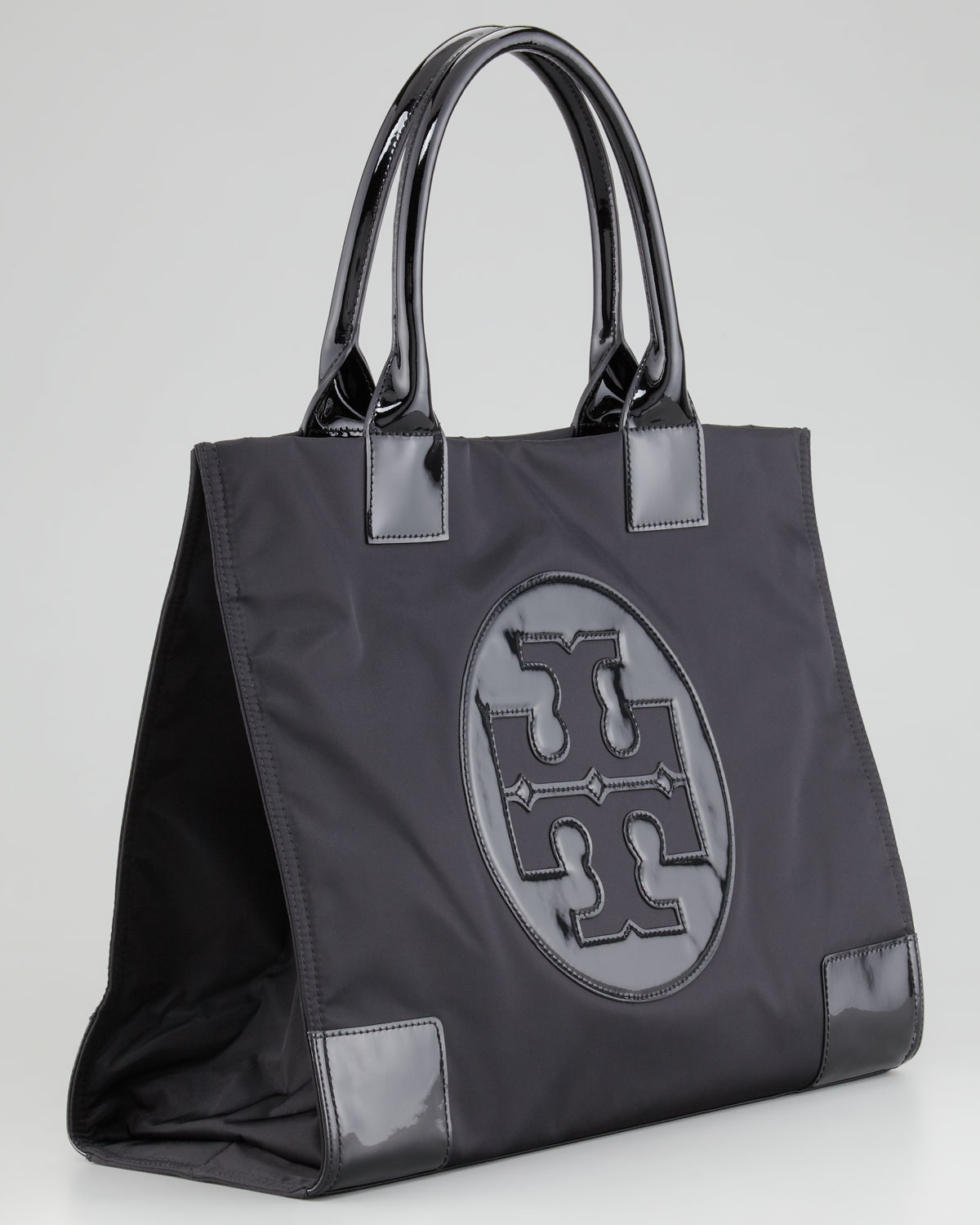
Two treatments deliver most of the brand’s recognisability, and on tory burch shoes the emblem appears in both. On the Reva ballet flat it arrives as a cast metal medallion at the front of the shoe. The Miller sandal handles it differently: a circular laser-cut opening at the toe, cut clean through the leather, with gold rivets securing the strap. On leather goods it turns up embossed into wallets and card cases, and centred on the front panel of the diamond-quilted Fleming bag. In every case the emblem appears once, at a single point on the object. That singular placement is the whole visual argument: the mark is meant to be noticed, then left alone. Where it instead repeats across a surface, you are looking at the pattern line that grew out of it.

The T Monogram: a repeating pattern line, reported from Spring 2021

The T Monogram is a separate and much later thing: an all-over repeating pattern built from the Double T. It is reported to have been introduced for Spring 2021, roughly seventeen years after the emblem. Written correctly it is two words, both capitalised, and no hyphen. It works as a named line you can shop as its own category, instead of a treatment applied at random. Here “monogram” is the ordinary industry convention for a repeated house mark, not a claim that the design spells anyone’s initials. Because the repeat covers an entire surface, a T Monogram piece is identifiable from across a room in a way a single cast emblem is not. That is the difference in one line: the emblem is a detail, the monogram is the material.

Where the T Monogram is carried: the materials

Coated canvas, jacquard, knitwear and small leather goods are where the repeat turns up. Product names read on the brand’s own US site in September 2026 make the construction clear from the wording alone. In accessories there are pieces such as the T Monogram Coated Jacquard Envelope Small Wallet and the T Monogram Mini Belt Bag. The same naming runs through tory burch clothing, on a T Monogram Jacquard Skirt, a Jacquard Cardigan and a Contrast Cuff Straight Leg Jean. The jacquard naming indicates the pattern is carried in the weave rather than printed on afterwards, which is why those pieces hold it so evenly. On coated canvas the surface is finished and wipeable, and that is why the pattern appears so often on wallets and belt bags. Care follows accordingly — coated and woven surfaces should be spot-cleaned with mild soap, and plated hardware buffed dry and nothing more.

The two marks compared

Put the two side by side and the differences resolve quickly. One is an emblem and one is a pattern. One dates from the founding year, while the other is reported from a recent season. One arrives as hardware, a cutout or an emboss at one point on the object; the other is built into the surface of a fabric or coated canvas. Both count as genuine brand marks, so neither is a downgrade of the other, and both appear across bags, shoes and ready-to-wear. Set out in the table are the six differences that do the most work when reading a product name or a resale listing.

Point of difference Double T T Monogram
What each one is A single emblem: a serif T and its mirror image, in a circle A repeating all-over pattern made from that emblem
When it arrived Carried since 2004, the founding year Introduced for Spring 2021, according to reports
How it goes on Cast hardware, laser-cut cutout, or embossed leather Woven into jacquard, or carried on coated canvas and knitwear
Frequency on the object A single time, at one focal point Continuously, across the whole surface
Typical carriers Ballet flats, thong sandals, quilted bag fronts, card cases Wallets and belt bags, jacquard skirts, cardigans and denim
Correct written form Double T: no hyphen T Monogram: two capitalised words

Why the two are constantly conflated

The obvious reason is that the pattern is made out of the emblem, so a quick glance registers the same shape twice. Both are also casually called “the logo,” a word that flattens the distinction the moment it is used. Resale listings compound the problem, because sellers write whatever they think will surface in a search. Published brand histories add another layer: they set out the emblem’s origin and then illustrate the piece with a monogram product. The brand’s own vocabulary does not help, since the letter T anchors both names. None of this is mysterious, but it means the word “logo” alone tells you nothing. Reading the full product name is the fastest available fix.

One mistake worth calling out: David Hicks

The interior decorator David Hicks has been credited repeatedly by the founder as a formative influence, and her Spring 2018 collection was dedicated to him. Hicks was English, and he lived from 1929 to 1998. At least one widely syndicated account of the logo’s history describes him as a Moroccan interior designer, and it is flatly wrong. The Moroccan reference in those pieces belongs to a claim about pattern geometry and not to the man’s nationality; even that claim is reported, not confirmed. A second story, that the mark was chosen from roughly two hundred options prepared by an outside firm, comes from an interview retelling and belongs in the same reported category. None of this changes what the emblem is, but it shows how much unsourced material attaches to a mark this recognisable. Where a source gets Hicks’s nationality wrong, the rest of its origin story should be read just as cautiously.

What the distinction changes when you buy

Once the marks are separated, the choice becomes a question of how visible you want the brand to be. The discreet option is a single cast or cut emblem; the pattern is the emphatic one. Observed on the brand’s US site in September 2026, the Miller sandal was listed at around $200, and the Fleming Crossbody about $470. Monogram small leather goods spanned from roughly $190 to about $310, with monogram ready-to-wear from around $395 to about $550. These are observed market prices and not an official price list; no fixed pricing is published by the brand, and figures move by season, market, material and channel. A tory burch sale changes which pieces are reachable and at what price, but it changes nothing about what either mark is. Read the product name before the photograph whenever you are assessing a listing.

The condensed version

The Double T is an emblem — two mirrored serif Ts in a circle, in use since 2004 and applied once per object. The T Monogram is a pattern: that emblem repeated across a surface, reported from Spring 2021 and sold as its own named line. Neither is more authentic than the other, and both run across bags, shoes and clothing. The confusion is a naming problem, and it resolves the moment you ask whether the mark appears once or many times. Capitalisation is a reliable tell in written sources as well. And when a source also tells you David Hicks was Moroccan, the thing you have learned concerns the source rather than the brand.

Lorem ipsum dolor sit amet

Lorem ipsum dolor sit amet, consectetur adipiscing elit, sed do eiusmod tempor incididunt ut labore et dolore magna aliqua. Ut enim ad minim veniam, quis nostrud exercitation ullamco laboris nisi ut aliquip ex ea commodo consequat.

Duis aute irure dolor in reprehenderit in voluptate velit esse cillum dolore eu fugiat nulla pariatur. Excepteur sint occaecat cupidatat non proident, sunt in culpa qui officia deserunt mollit anim id est laborum.

Mortgage Applications and Interac Casino Transaction Visibility: Interac vs PayPal

When you apply for a mortgage in Canada, your lender may review bank statements to confirm income, savings, debts and regular spending. Casino payments can therefore raise questions, even when the amounts are modest. This guide explains how an interac casino en ligne canada transaction may appear, how PayPal activity differs, and what records to keep before submitting a mortgage application.

How Interac Casino transactions appear on bank statements

An Interac e-Transfer is an account-to-account payment rather than a card purchase. The transaction appears in the online banking history and on the statement connected to the Canadian bank account used to send or receive it. The visible description can identify the recipient, sender or payment processor, so the casino itself may not always be the name shown.

Deposits and withdrawals have different labels

For a casino deposit, the statement may show the recipient or processor name, along with the amount and date. A withdrawal usually arrives as an ordinary Interac e-Transfer from the processor. Names such as Gigadat or Payper Inc. can appear instead of the casino brand. This distinction matters when a lender compares statement entries with information provided on an application.

Interac does not connect directly to online casinos. Payment processors handle the cashier flow, including send-to-email transfers and Request Money payments. Deposits are usually credited almost instantly and can take up to 30 minutes. Withdrawals take longer because the operator may review the account first; published examples range from about one hour to three business days after approval.

Why visibility matters during mortgage underwriting

A lender normally wants a clear picture of your cash flow. Repeated gambling-related payments may prompt questions about affordability, even if each transaction is small. Large or frequent transfers can also make savings appear less stable. An Interac transaction cannot be reversed after acceptance, so a disputed payment must be addressed with the operator rather than the bank.

This does not mean one payment automatically prevents approval. Underwriters assess the wider pattern, including income, credit commitments, down payment funds and account balances. The practical issue is transparency: unexplained payments or withdrawals can create extra work and delay a file.

Interac and PayPal leave different financial trails

Interac e-Transfer records are created directly in the bank account. PayPal normally adds an intermediary account between the bank and the merchant. As a result, a bank statement may show a PayPal transfer or funding transaction, while the detailed merchant history sits inside the PayPal account. The lender can still request that supporting record if the activity affects the application.

That difference can make PayPal activity less immediately descriptive on a bank statement, but it does not make it invisible. Bank deposits, withdrawals and card charges remain part of the financial record. A lender assessing unexplained funds may reasonably ask for PayPal statements, account histories or an explanation of transfers between the wallet and the bank.

Point of comparison Interac e-Transfer PayPal
Where the detailed record is held Directly in Canadian online banking In PayPal, with related bank or card entries
Currency relevant to this comparison Canadian dollars only May involve currency conversion depending on the transaction
Typical casino deposit timing Almost instant to 30 minutes Depends on the operator and PayPal processing
Typical Interac withdrawal examples About one hour to three business days after approval Depends on PayPal and the operator’s review process
Chargeback position Accepted transfers cannot be reversed by the sender or bank Disputes follow PayPal’s applicable process and terms

Preparing casino payment records for a mortgage application

Good records reduce confusion. Before applying, review the bank accounts and payment wallets that may be examined. If you use online casino sites that accept interac deposits, note the processor names as well as the casino names, because they may not match.

  1. Download recent bank statements and identify every casino-related deposit, withdrawal and transfer.
  2. Match processor names to the relevant casino account history or email confirmations.
  3. Separate gambling activity from genuine savings, salary deposits and down payment funds.
  4. Ask your mortgage professional what supporting documents the lender requires.
  5. Keep explanations factual and consistent with the account records.

It is also sensible to check the timing of a planned purchase. An account that has shown frequent gambling activity may need a period of stable, well-documented balances before an application looks straightforward. Do not move funds between accounts simply to hide their origin. That can make the source of the money harder to verify.

  • Use a personal Canadian bank account in the same legal name as the casino account.
  • Keep deposit and withdrawal confirmations with your monthly statements.
  • Track processor names such as Gigadat, Paramount Commerce or Payper Inc.
  • Maintain a separate record of the funds reserved for your down payment.

For players searching for casino games accept interac, the payment method can be convenient, but convenience should not replace financial discipline. An interac cash out casino transaction still appears as incoming money, and an online casino payout through interac may need to be explained if the lender is tracing the source of funds.

Conclusion: choose clarity over concealment

Interac offers fast, familiar payments for Canadian online casinos, but its direct connection to your bank account makes transaction activity easy to identify. PayPal may place more detail inside a separate wallet, yet related transfers remain reviewable. For a mortgage application, the strongest approach is consistent records, stable finances and honest explanations. Keep gambling activity separate from essential savings, preserve supporting documents, and ask your broker or lender how those transactions will be assessed.

Which Types of Sweepstakes Casinos Still Accept Interac From Canadian Players?

Canadian players looking for an Interac Casino should first separate legitimate payment support from outdated labels and vague promises. Interac e-Transfer remains widely available through Canadian banks and credit unions, but each sweepstakes site decides whether it accepts deposits, withdrawals, or both. If you are comparing interac casino withdrawals, the key checks are the operator’s rules, identity requirements, transaction limits and provincial availability.

How Sweepstakes Casinos Use Interac Today

Sweepstakes casinos do not connect to Interac directly. Instead, they use registered payment processors that present an Interac e-Transfer option at the cashier. The processor may send a request through a bank redirect, or it may provide an email address, recipient name and reference code for a standard transfer.

Request Money and send-to-email deposits

With Request Money, the cashier opens a hosted Interac page. You select your financial institution, sign in through your normal banking service and approve the payment. A send-to-email flow works differently: you start the transfer inside your banking app, enter the processor’s details and place the supplied reference code in the message field.

Interac describes delivery as almost instant, although transfers can take up to 30 minutes. Some operators make funds available immediately, while others wait for confirmation from the processor. The exact process matters because a payment sent without the required code or within the wrong 24-hour transfer window may need manual review.

What an Interac Casino should disclose

A credible Interac Casino should clearly state its accepted currency, minimum deposit, withdrawal method, processing times and verification rules. Interac supports Canadian-dollar transfers only, so a site quoting foreign-currency balances may apply its own conversion process rather than offering a direct Interac payment.

Look for a named processor, a clear cashier page and instructions that match the bank transfer you are asked to make. Interac Online, the older bank-login checkout, was phased out between 2022 and 2024. A current page may still use “Interac Online Banking” as a label for an e-Transfer request, but that does not mean the retired network is still operating.

Which Sweepstakes Casino Transactions Still Qualify?

The most useful distinction is between deposits and withdrawals. Many Canadian-facing gambling sites accept Interac deposits, but withdrawal support is more variable. Some require you to make a prior deposit with Interac before using it for a payout, while others return funds only to the original payment source.

Deposits, redemptions and interac cash out casino rules

Published Ontario examples show deposit minimums from C$5 at Caesars Ontario to C$10 at theScore Bet. Maximum deposits can reach C$10,000 or C$25,000 per transaction, but your bank’s own daily limit still applies. Typical market limits are often lower, around C$3,000 to C$10,000.

For an interac cash out casino, the withdrawal may arrive as an ordinary e-Transfer from the processor rather than under the casino’s name. Payper Inc., Gigadat Solutions and Paramount Commerce are examples of processors used in Canadian-facing payment flows. An approved payout can arrive in about an hour at some sites, while other operators quote one to three business days after review.

Expect the casino to verify that the bank account belongs to you. The legal name on the account must match your gaming account, and some operators also require a matching address or a personal account rather than a business account.

Transaction detail Published or typical Canadian example
Smallest published deposit C$5 at Caesars Ontario
Example deposit minimum C$10 at theScore Bet
Example maximum deposit C$10,000 at theScore Bet
Higher published maximum C$25,000 at Caesars Ontario
Published minimum withdrawal C$1 at Caesars Ontario
Example maximum withdrawal C$25,000 at theScore Bet and Caesars Ontario
Typical withdrawal timeframe Same day to three business days

How to Check an Interac Casino Before Playing

Payment availability alone does not establish that a sweepstakes casino is suitable for Canadian players. Provincial rules differ, and offshore sites may accept Canadian customers without provincial licensing. In Ontario, regulated operators must meet AGCO standards, while other provinces use arrangements such as PlayNow.com, Loto-Québec’s Espacejeux or Atlantic Lottery services.

Use this payment and safety checklist

Review the cashier and terms before making a deposit. The following checks can prevent avoidable delays:

  • Confirm that Interac e-Transfer is available for both deposits and withdrawals, not deposits only.
  • Check the minimum, maximum and expected processing time for each transaction.
  • Verify that your Canadian bank account name and address match the gaming account.
  • Read the closed-loop rule to see whether a previous Interac deposit is required.
  • Check whether your bank charges a transfer fee or imposes a lower daily limit.

Most full-service Canadian chequing accounts include free e-Transfers, but fees can range from C$0.50 to C$1.50 on accounts without a fee-waiving plan. Receiving is generally free. An accepted transfer cannot be reversed, so a payment dispute must be handled with the operator or processor rather than through a bank chargeback.

Compare bonuses without overlooking payment terms

Interac deposits are normally eligible for welcome offers, although the final answer is always in the promotion’s terms. When comparing best interac casino deposit bonuses, check wagering conditions, expiry dates, eligible game categories and any maximum withdrawal attached to bonus funds. A large headline offer may be less useful than a smaller promotion with clear redemption rules.

Also check responsible-gambling tools. Ontario operators must offer deposit and loss limits for 24 hours, seven days and one month, along with breaks and self-exclusion options. Players should select limits before depositing, especially when a fast payment method makes repeated transactions easy.

Conclusion: Choose Interac Support That Is Specific

The sweepstakes casinos most likely to serve Canadian Interac users are those that explain the processor, transaction route and payout conditions in plain language. Treat deposit support and withdrawal support as separate features, confirm your bank’s limits, and complete identity checks early. A dependable interac casino canada option should make the entire payment path clear before you commit funds.